![Artist's impression of a distant exoplanet with swirling clouds and a ring system.]()
New Exoplanet Discovery Hints at Potential for Liquid Water
Astronomers have announced the discovery of a new exoplanet, designated Kepler-186f II, orbiting a red dwarf star in the Cygnus constellation. Located approximately 500 light-years from Earth, this celestial body resides within its star's habitable zone, the region where temperatures could allow liquid water to exist on its surface. Initial spectral analysis suggests an atmosphere rich in nitrogen and oxygen, fueling excitement about the possibility of life beyond our solar system. Dr. Aris Thorne, lead researcher at the Dublin Institute for Advanced Cosmology, stated, "This discovery represents a significant step forward in our search for Earth-like worlds. The presence of water, if confirmed, would dramatically increase the odds of habitability." Further observations using the James Webb Space Telescope are planned to analyze the exoplanet's atmospheric composition in more detail.
Published: October 26, 2023 | Category: Astronomy

Breakthrough in Quantum Entanglement Achieved at Trinity College Dublin
Researchers at Trinity College Dublin have achieved a significant milestone in quantum physics, successfully maintaining quantum entanglement between two particles for an unprecedented duration. This phenomenon, where two particles become linked and share the same fate regardless of distance, is crucial for the development of quantum computing and secure communication networks. Professor Saoirse O'Malley, head of the quantum research group, explained, "Our team has developed a novel method to shield entangled qubits from environmental decoherence, allowing us to preserve their fragile quantum state for much longer than previously thought possible. This opens up new avenues for building robust quantum systems." The implications of this research could pave the way for more powerful and secure technologies, revolutionizing fields from medicine to cryptography.
Published: October 25, 2023 | Category: Physics
![Microscopic view of DNA double helix strands.]()
New Genetic Insights into Arctic Fox Adaptation Unveiled
A collaborative study involving scientists from University College Cork and the Arctic Research Institute has shed new light on the genetic adaptations that allow the Arctic fox to thrive in extreme cold. By sequencing the genomes of Arctic foxes from various populations, researchers identified specific genes related to metabolism, immune response, and fur insulation that have undergone rapid evolution. "The Arctic fox is a remarkable example of natural selection in action," commented Dr. Liam Gallagher, a geneticist involved in the study. "Understanding these adaptations not only enhances our knowledge of evolutionary biology but also provides valuable insights into how other species, including humans, might adapt to changing environmental conditions." The findings were published in the latest issue of the journal 'Arctic Genomics'.
Published: October 24, 2023 | Category: Biology

Advanced Climate Models Predict Accelerated Sea Level Rise
A team of environmental scientists at the National University of Ireland Galway has developed a new generation of climate models that incorporate more complex oceanic and atmospheric feedback loops. Their findings, released today, indicate that global sea levels may rise at an accelerated pace in the coming decades than previously projected. The enhanced models consider factors such as the melting of Antarctic ice sheets and changes in ocean current patterns with greater precision. Professor Aisling Murphy, the lead author, warned, "While the projections are concerning, they also underscore the urgent need for immediate and decisive action on climate change mitigation. This research provides more granular data to inform adaptation strategies for vulnerable coastal communities worldwide." The full report is available on the institute's environmental science portal.
Published: October 23, 2023 | Category: Environmental Science
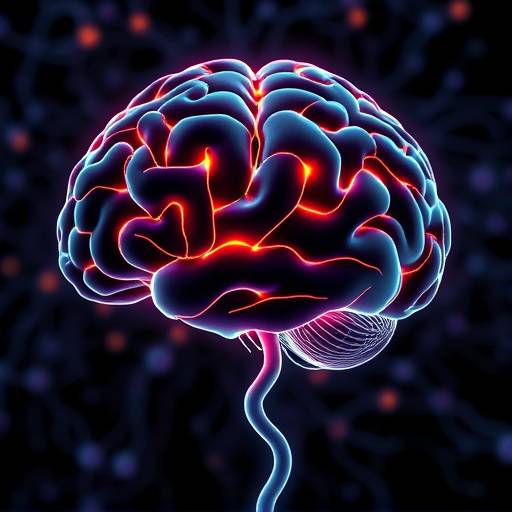
Novel Technique Uncovers Brain's Memory Consolidation Mechanisms
Neuroscientists at the Royal College of Surgeons in Ireland (RCSI) have pioneered a new non-invasive technique that allows for real-time observation of memory consolidation processes in the brain. This innovative approach utilizes advanced imaging combined with optogenetic stimulation, providing unprecedented detail on how short-term memories are transformed into long-term ones. Dr. Eoin Fitzgerald, head of the neuroscience department, stated, "By visualizing these intricate neural pathways as they form, we can gain a deeper understanding of conditions like Alzheimer's and develop more targeted therapeutic interventions. This is a game-changer for memory research." The study, published in 'Neuron', was funded by the Irish Research Council.
Published: October 22, 2023 | Category: Neuroscience